Jonny Naylor, VP Content
The capture of Nicolás Maduro by U.S. forces on Saturday, January 3, 2026, has shifted the conversation from tactical operations to the technical and economic realities of the “Day After.” For the Wharton Energy and Climate Club, this represents a potential tectonic shift in the energy economics faced by players near and far, provided the massive hurdles of infrastructure, governance, and chemistry can be cleared.
Below is a primer on the state of Venezuela’s energy sector and the variables that will define its return to global markets.
The Historical Context
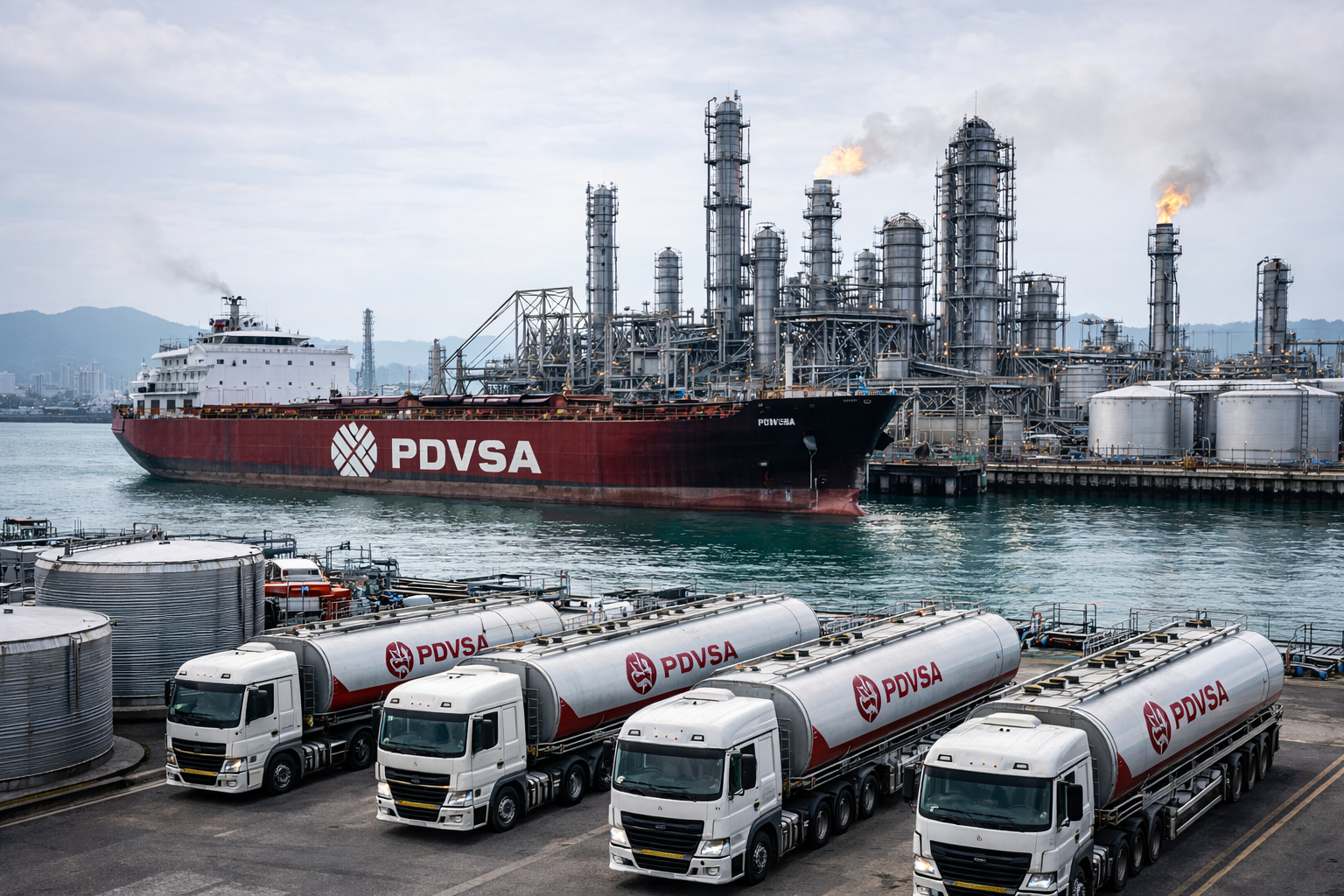
To grasp the scale of the current challenge, one must look at the trajectory of PDVSA, Venezuela’s state oil company:
- The Peak: Venezuela produced over 3.5 million barrels per day (bpd) in the late 1990s.
- The Decay: Following years of underinvestment, nationalization, and sanctions, production has collapsed. Recent estimates place output at approximately 0.8 to 1.1 million bpd, depending on whether one looks at 2025 averages or current post-blockade spot estimates.
- The Infrastructure Deficit: This decline reflects not just reduced drilling activity, but a broader failure of the power grid, pipelines, and maintenance systems required to sustain production.
The Chemical Reality
Venezuela’s primary hydrocarbon assets lie in the Orinoco Belt and consist predominantly of extra-heavy crude (EHC).
- API Gravity: Many Orinoco streams are extra-heavy, often cited around ~8° to 10° API, though this varies by field and blend. Such low gravity implies extremely high viscosity.
- The Role of Dilutents: This viscosity means the crude cannot be transported or exported at scale without blending it with diluents, such as naphtha or light condensate, and in some cases additional heating.
- The Role of Russia: Since mid-2025, Venezuela has increasingly imported Russian-sourced naphtha to serve as this “cutter stock,” alongside U.S.-linked shipments authorized under specific sanctions licenses.
- The Blockade Effect: A recent U.S.-ordered blockade and enforcement campaign targeting sanctioned tanker traffic has increased disruption risk for both crude and diluent movements, potentially throttling production until alternative supply chains are established.
Potential Impacts on Global Oil Flows
If sanctions and shipping restrictions loosen under a transition government, the global trade map will likely be redrawn:
- The U.S. Gulf Coast (USGC): Many USGC refineries are optimized for heavy sour grades and historically processed Venezuelan barrels. Re-establishing this link could lower feedstock costs for these complex refiners.
- Refining Margins: While Venezuelan grades largely match USGC refinery configurations, realized profit margins will ultimately depend on global diesel demand and the prevailing heavy-light crude price differential.
- Canada (WCS): Increased Venezuelan exports may displace other heavy imports, most notably Canadian Western Canadian Select (WCS), potentially widening the discount on Canadian crude as competition for limited USGC coker capacity intensifies.
The Recovery
The timeline for a meaningful recovery remains contested among policymakers and industry participants:
- The Immediate Term: At an energy industry conference in Miami, U.S. Energy Secretary Chris Wright suggested Venezuela could lift output meaningfully with relatively modest near-term investment if political and economic conditions stabilize.
- The Long Haul: By contrast, leadership at numerous oil majors have cautioned that realizing Venezuela’s full upstream potential would likely take years, if not decades, of sustained capital investment.
- The Legal Hurdle: U.S. use of force in the Venezuela context raises serious international and domestic legal questions. These issues may introduce uncertainty around recognition, sanctions, and enforcement risk, all of which are central to securing durable, long-term investment commitments.
The Transition Paradox: Methane and Carbon
Venezuela’s potential return to oil markets presents a sharp paradox for the global energy transition:
- The Fossil Resurgence: A surge in heavy crude supply could lower global energy costs and dampen the economic incentive for rapid electrification and renewable deployment in certain markets.
- The Methane Opportunity: Venezuela is among the world’s major natural gas flaring countries. According to Americas Quarterly, the country wastes a volume of gas roughly equivalent to Colombia’s entire annual consumption.
- The Hypothesis: A U.S.-led modernization effort that prioritizes capturing associated gas and reducing methane leakage could, in theory, generate a net-positive climate outcome relative to the current status quo of chronic flaring, venting, and infrastructure decay.
The Bottom Line
The seizure of a leader is a tactical event. The restoration of production capacity and investability needed to monetize Venezuela’s roughly 300 billion barrels of proved reserves is a decadal institutional project. For Wharton students and energy professionals, the convergence of project finance, international law, refinery economics, and methane management in Caracas may become the defining energy case study of the late 2020s.