
WECC Content Team
On November 8, 2025, the Wharton Energy and Climate Club welcomed 300 students, alumni, and industry leaders to Convene in Center City Philadelphia for its annual conference. Under the theme “Fortifying the Future: Advancing Resilience for the Energy Transition,” the day’s programming explored the critical intersection of rapid AI adoption, aging infrastructure, and the financial innovation required to bridge the gap.
The event featured a robust lineup of keynotes and panels, moving from local grid challenges to the global “nuclear renaissance” and the capital stacks making it all possible.
Opening Remarks: Michael Nutter
The conference opened with remarks prepared by Former Mayor of Philadelphia Michael Nutter, who was sadly unable to attend due to an urgent personal matter. The recorded address set a grounded tone for the day, emphasizing that energy security and affordability are among the most pressing issues facing families today.
Reflecting on his tenure, the remarks highlighted the creation of the Philadelphia Energy Authority in 2010, which was established with a thesis to ensure energy security and affordability. The opening address concluded with a clear call to action: “We need greater public-private partnerships” to provide clean, affordable, and consistent energy for all.
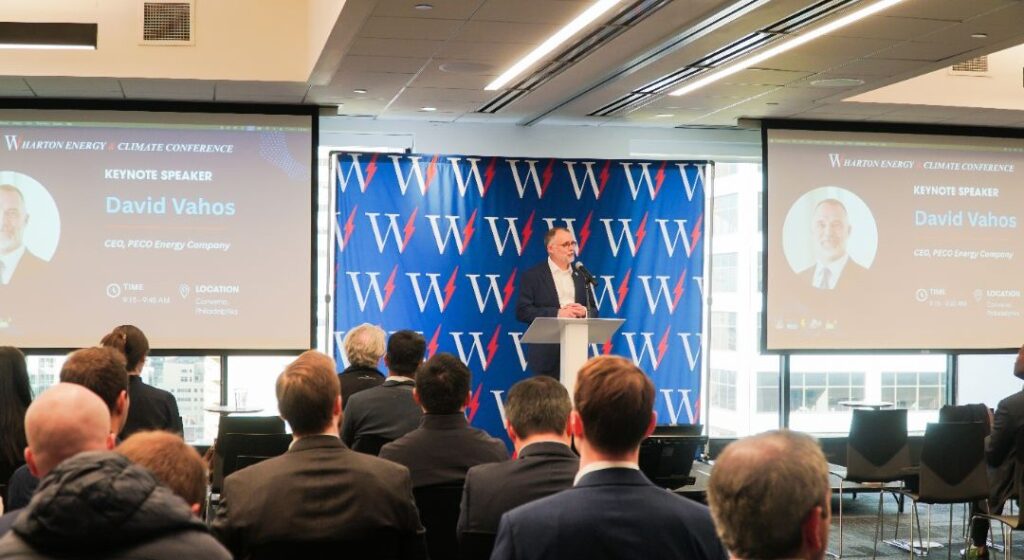
Morning Keynote: David Vahos
David Vahos, CEO of PECO, took the stage to discuss the “pivotal point in economic transformation” driven by the rise of Artificial Intelligence. Despite spending 30 years in the energy industry, Vahos noted he has never seen demand growth like this before.
- The Challenge: Vahos highlighted that data centers built today are 3 to 5 times larger than those from 2019, and warned that PJM could face a capacity reserve deficiency as early as 2027.
- The Strategy: PECO is focused on three pillars: Collaborate, Invest, and Plan. Vahos emphasized the need for “fairness” regarding large users, ensuring data centers pay their share for grid usage.
- Baseload Reality: While acknowledging the role of renewables, Vahos argued that “we need more baseload power”. He shared PECO’s current view that current technology, solar and battery storage alone do not yet qualify as baseload. He instead advocated for extending the lives of nuclear and fossil fuel plants to bridge the gap.
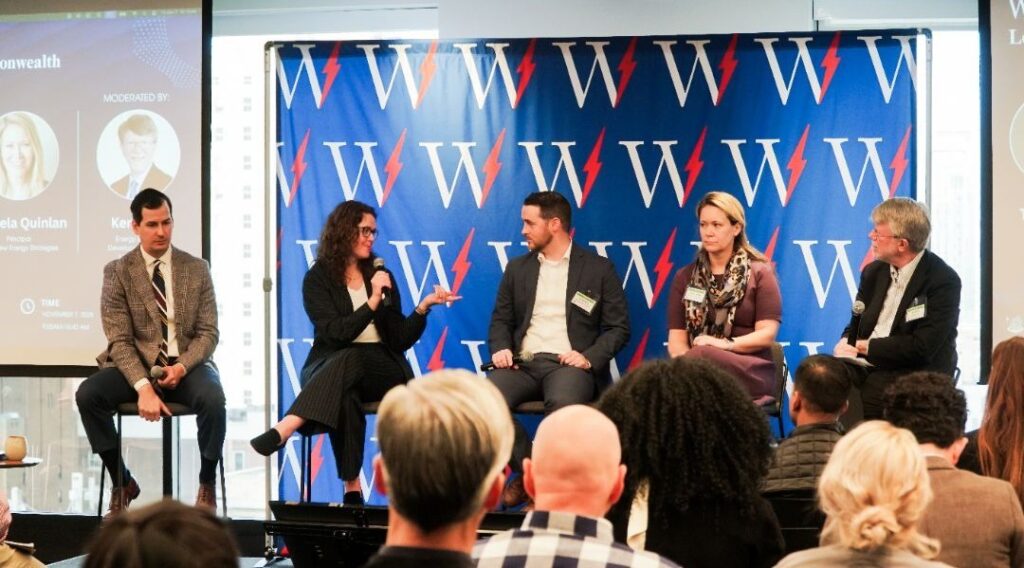
Looking Local: Grid Resilience for the Commonwealth
Moderated by Ken Kulak (Morgan Lewis), this panel brought together voices from the grid operator, state government, and the private sector to unpack the regulatory and physical realities facing the PJM interconnection.
- The Reliability Wake-Up Call: Tim Burdis, Director of State Policy Solutions at PJM Interconnection, painted a stark picture of the current landscape. He pointed to November 2022, which saw a dearth of capacity, followed immediately by Winter Storm Elliott in December 2022, in which many assets traditionally viewed as reliable failed under adverse conditions. Combined with the first load increase since the Global Financial Crisis and a recent capacity auction that cleared with no margin, Burdis’s message was unequivocal: regardless of the specific forecast, directionally it’s clear we need more power on the system.
- A Policy of “All of the Above”: representing the state’s executive branch, Sam Robinson (Deputy Chief of Staff, Gov. Shapiro’s Office) rejected the idea of sequential problem-solving. He instead advocated for an “all of the above” attitude where the administration pulls every lever simultaneously.
- Legislative Fixes: Robinson was keen to highlight proposed legislation designed to synchronize the interconnection queue with local permitting status, ensuring that projects ready to build aren’t stuck in regulatory limbo.
- The Affordability Equation: addressing the political dimension of energy prices (referencing recent elections in New Jersey and Virginia), Robinson noted that while energy as a percentage of household income is actually lower or comparable to 15 years ago, it remains a potent issue. He attributed recent cost spikes largely to the war in Ukraine driving natural gas prices and broader supply chain constraints, rather than the transition itself.
- FERC’s Changing Role: Pamela Quinlan (Principal, GQS New Energy) provided interesting context regarding the Federal Energy Regulatory Commission (FERC). She recalled that historically FERC meetings were often academic discussions about long-term system evolution because there was ample spare capacity. Today, with the stakes much higher and capacity thin, the environment has shifted from theoretical to urgent, requiring a more active “referee” to harness market forces effectively.
- Creative Solutions & Community Buy-In: Robin Lunt (Chief Commercial Officer, Guzman Energy) offered a perspective from outside the PJM footprint, discussing the development of wholesale markets in Colorado. She shared a compelling example of resilience through community engagement: a solar farm in Grand Junction, initially denied a permit, was eventually approved after the developers added an agricultural dimension – introducing livestock grazing to the site! This creative dual-use approach turned local opposition into support, illustrating that resilience is as much about social license as it is about engineering.
- The Data Center Dilemma: The panel devoted significant time to the role of hyperscalers.
- Large Load Tariffs: Robinson discussed proposals where data centers could receive interconnection priority if they bring their own generation, effectively bringing “their own capacity” to the grid.
- New Standards: Quinlan noted that NERC is working on standards to register data centers as entities, ensuring there are clear protocols for what happens when a large load drops offline – similar to the standards that already exist for generation failures.
- Alignment: Burdis concluded that while data center development is vital for national security, their interests must be aligned with grid reliability.
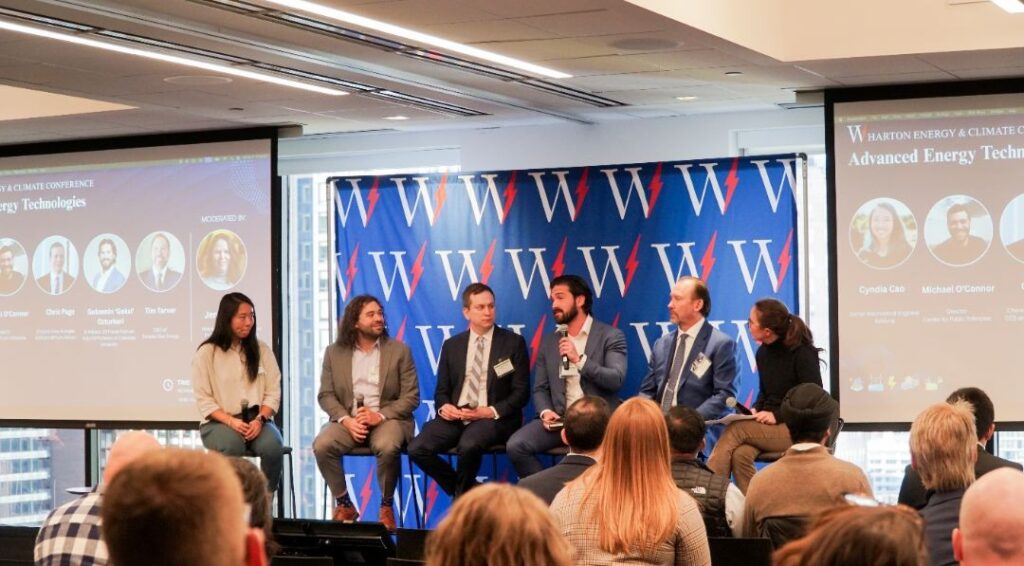
Advanced Energy Technologies
This session, moderated by Jen Wilcox (UPenn), explored how traditional industry expertise is being repurposed for a carbon-negative future.
- Leveraging Oil & Gas: Chris Page (Chevron New Energies) and Tim Tarver (Exceed Energy) argued that the subsurface expertise of the oil and gas industry is vital for scaling Geothermal and Carbon Capture (CCS). Tarver also shared his high conviction that geothermal energy, with what he described as “closed-loop carbon negative baseload power”, would see phenomenal growth in the coming years. Page was optimistic about the role of traditional O&G companies’ role in the transition, citing their experience and expertise in managing large development projects, something vital to executing resilient buildout successfully.
- Geothermal Economics: Michael O’Connor (Center for Public Enterprise) distinguished geothermal as a “utility play” with steady 30-year returns, contrasting it with the volatile commodity cycles of oil and gas.
- Scaling Carbon Removal: Cyndia Cao (AirMyne) discussed the exciting challenge of scaling Direct Air Capture (DAC), noting that her company has just signed to build a 1,000-tonne/year pilot plant.
- Policy Consistency: Goksi Ozturkeri (GS Power Partners) warned that “stroke of the pen” risk – arbitrary policy changes – is the biggest inhibitor to innovation. The panel agreed that consistent policy is often more valuable than temporary tax credits, especially with long-lived assets which require bankability from often risk-averse institutions.
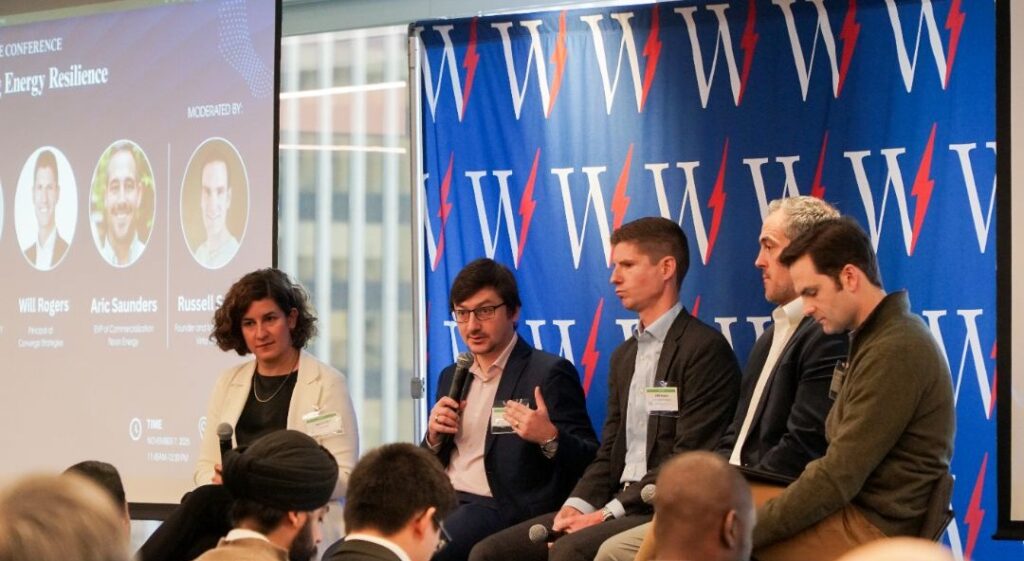
Innovations Enhancing Energy Resilience
Moderated by Russell Sprole (Virta Ventures), this panel discussed resilience in the age of AI and geopolitical tension.
- Resilience as Deterrence: Will Rogers (Converge Strategies) offered a national security perspective, connecting resilience with deterrence and explaining that robust infrastructure is less likely to be targeted by adversaries. He pointed to the Miramar microgrid’s ability to operate disconnected from the civilian system for three weeks as an example of what level of grid resiliency is required in a military, and the lessons that could be ported to the civilian context.
- Flexibility is Key: Ayse Coskun (Emerald AI) and Sarp Ozkan (Enverus) argued that resilience now requires flexibility. Coskun described how “grid-aware” data centers that can flex their load during peak times will meaningfully help smooth systems’ peaks and troughs, reducing overbuild. Ozkan highlighted how AI is compressing interconnection study timelines from years to days, a key issue discussed by the Looking Local: Grid Resilience for the Commonwealth panel. For a deeper dive into grid-aware datacenters, be sure to check out The Wharton Current’s recent episode which featured EmeraldAI as a guest.
- Long-Duration Storage: Similarly to Coskun, Aric Saunders (Noon Energy) emphasized the need to smooth peaks and troughs, but with 100+ hour battery systems. Deployment of such systems offers the opportunity to turn many intermittent renewables into reliable baseload power.
Afternoon Keynote: Patrick Raab
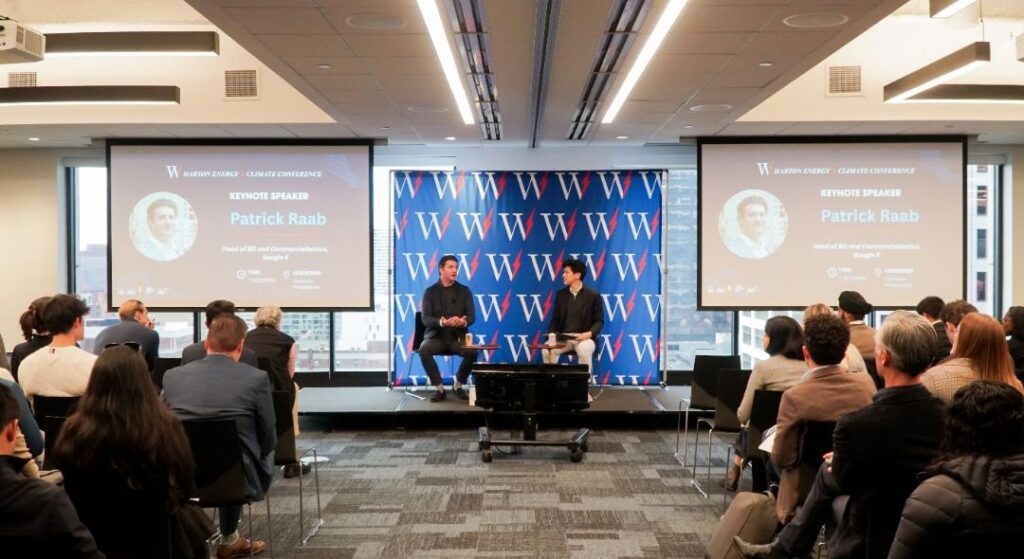
Patrick Raab, Head of Commercialization at X (Alphabet), delivered an engaging and wide-reaching keynote. Raab first laid out his thesis for how and why AI was likely to fundamentally change our society. He believes it will totally transform how humans interact with one another and will ultimately become a “coworker,” seamlessly cooperating with existing workers and the tools they use.
In contrast to some recent press articles questioning the productivity gains from AI, Raab cited BCG studies suggesting that the technology could be driving 5x higher revenue growth and 3x increases in cost reductions. He reminded the audience of the pace at which the technology is gaining adoption: when the telephone was introduced, it took 75 years to reach 100 million users, whereas ChatGPT passed the same milestone in just two months.
At this point, Raab directed the conversation towards energy. Briefly discussing the improvements in compute requirements Google is seeing internally, he explained why grid planning is so important in today’s world, why existing technologies and tools are not adequate, and how Tapestry, “Alphabet’s moonshot for the electric grid,” is addressing it.
- Google Maps for the Grid: Raab explained that the current grid is an analog, one-way highway trying to support a digital, decentralized future. Tapestry aims to solve this by creating a “Google Maps for the grid,” providing granular situational awareness and synthesizing fragmented datasets.
- Collaboration at Scale: He also likened the platform to “Google Docs,” allowing diverse stakeholders, from regulators to engineers, to collaborate on complex models rather than working in silos.
- Real-World Impact: Raab shared a compelling case study from Chile, where the system operator used Tapestry tools to reduce analysis times from multiple days to just 5 minutes. This efficiency gain was an enormous step-change in capability for managing the “intense complexity” of a modern, renewable-heavy grid. He further noted that PJM is a flagship partner, using these tools to tackle the massive interconnection queue.
Financing Beyond the Bottlenecks
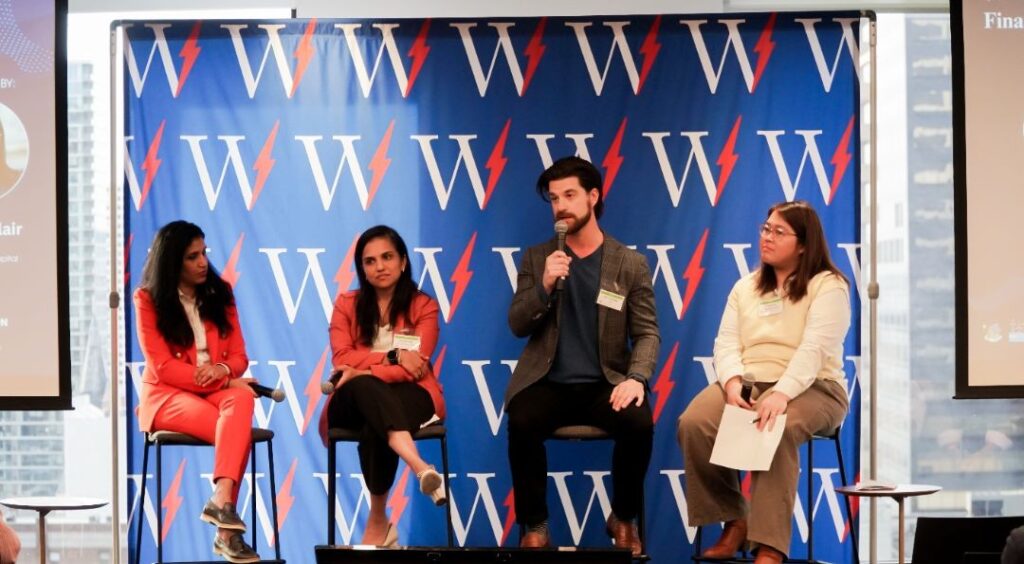
Moderated by Trixie Blair (Greenbacker Capital), this panel addressed how capital is flowing in a high-interest, complex market environment.
- Strategizing for Resilience: Radhika Shroff (Nuveen Private Equity Impact) emphasized a strategy of investing in deflationary technologies that save the end customer money, such as energy efficiency and waste recycling, arguing that these value propositions hold up regardless of the political climate. She highlighted Power Takeoff, a portfolio company using AI to drive behavioral energy savings for small businesses, as a prime example of a capital-efficient solution that doesn’t rely on heavy subsidies.
- “Picks and Shovels” over Molecules: Manasi Desai (Lime Rock New Energy) described her firm’s diversification away from molecule-heavy bets. Instead, her firm is doubling down on the “picks and shovels” of the transition, such as “blue-collar” grid services like pole replacements, storm restoration, and transmission upgrades. She cited the success of Electric Power Engineers, a firm helping utilities navigate interconnection bottlenecks, as proof that the most critical opportunities often lie in enabling infrastructure rather than generation assets themselves.
- Financing the “Unfashionable”: Guy Van Syckle (HASI) advised the audience to look for “less fashionable” solutions that offer meaningful scale and rapid payback, such as low-flow toilets or comprehensive upgrades to military family housing. He shared an example of a project integrating HVAC, solar, and storage for military bases, which addressed mold issues and energy security simultaneously. While optimistic about the sector, Van Syckle warned that the primary constraint is no longer just capital, but a severe shortage of skilled labor, electricians and HVAC technicians, needed to execute these projects.
Meeting the Moment: Building and Scaling Nuclear Fleets
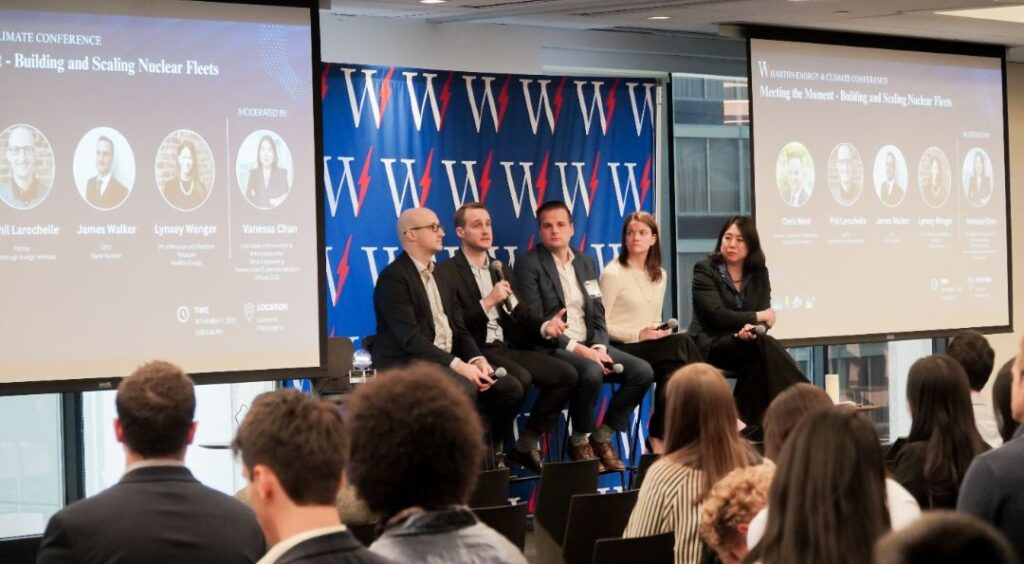
Moderated by Vanessa Z. Chan (Vice Dean of Innovation and Entrepreneurship, Penn Engineering), this session explored the “nuclear renaissance” fueled by the voracious energy appetite of hyperscalers. The panel featured Chris West (The Nuclear Company), Lynsey Wenger (NextEra Energy Resources), Phil Larochelle (Breakthrough Energy Ventures), and James Walker (Nano Nuclear Energy).
- The “First-Mover” Standoff: Dr. Vanessa Chan utilized a memorable analogy to describe the First-of-a-Kind (FOAK) financing challenge: “Squid Game Season 1 – no one wants to be first.” Chris West expanded on this, arguing that no single entity can bear such a risk alone, necessitating new structures to share liability among multiple stakeholders . Lynsey Wenger highlighted the structural mismatch in financing these projects, noting that while nuclear plants are 80-year assets, there is little precedent for project financing new builds in the current market.
- Supply Chain Bottlenecks: James Walker, who was previously interviewed on The Wharton Current podcast regarding the future of micro-reactors, identified fuel as the single biggest roadblock. He noted that the U.S. lacks sufficient domestic capacity and argued that building a reactor fleet is futile without first securing the domestic fuel cycle .
- Fusion vs. Fission: While fission is the solution for today, Phil Larochelle offered a surprisingly optimistic outlook on fusion. Discussion suggested that fusion technology could become cost-competitive (potentially under $6/watt) and come online sooner than consensus suggests, possibly before 2035, due to favorable regulatory environments compared to fission.
Resource Adequacy for AI
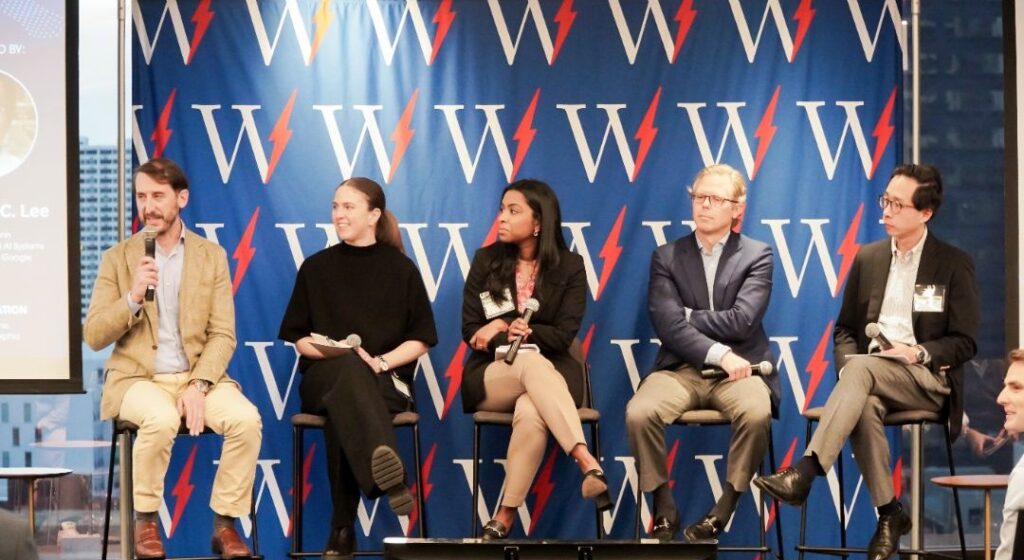
Moderated by Benjamin Lee (Professor at UPenn and Visiting Researcher at Google), this panel featured Ben Chadwick (Constellation Energy), Mary Kelly (Morgan Stanley), Rebecca Kennedy (Microsoft), and Jon Yoder (MN8). The discussion tackled the friction between the tech sector’s aggressive growth targets and the physical and economic realities of the grid.
- Tech and Energy Convergence: Mary Kelly described a return to “2021-like exuberance” in transaction volume as tech and energy companies converge and pushed back on concerns that excitement around AI was inflating a bubble in industry-adjacent investments such as datacenters and energy generation. However, she noted a critical distinction: unlike previous booms, transaction structures are becoming increasingly sophisticated to manage the unique risks associated with massive AI loads. Rebecca Kennedy added that energy law, once considered “boring and sleepy,” has become dynamic and central to corporate strategy.
- The Capacity vs. Generation Debate: Jon Yoder drove home a key distinction regarding the perceived shortage. He argued that the U.S. faces a “capacity problem,” not a generation problem, and that the challenge lies in the interconnection bottlenecks that prevent power from reaching demand centers. Because utilities are unlikely to match the blistering 20% growth pace of hyperscalers, Yoder suggested that the industry is moving toward a “bring your own capacity” model, as raised by Sam Robinson (Deputy Chief of Staff, Gov. Shapiro’s Office) in the Looking Local: Grid Resilience for the Commonwealth panel.
- Equity and Affordability: The discussion took a serious turn regarding cost allocation. Jon Yoder highlighted the political volatility of energy prices, referencing recent elections in New Jersey where affordability was a decisive issue. Ben Chadwick emphasized that grid costs were previously socialized across all ratepayers, and the massive infrastructure costs for AI ought not to fall too heavily on residential payers as a result of this transformation. Rebecca Kennedy pointed to Microsoft’s goal of 100% clean energy as a model for how large buyers can drive responsible development without overburdening the system.
Closing Keynote: Rich Roloff
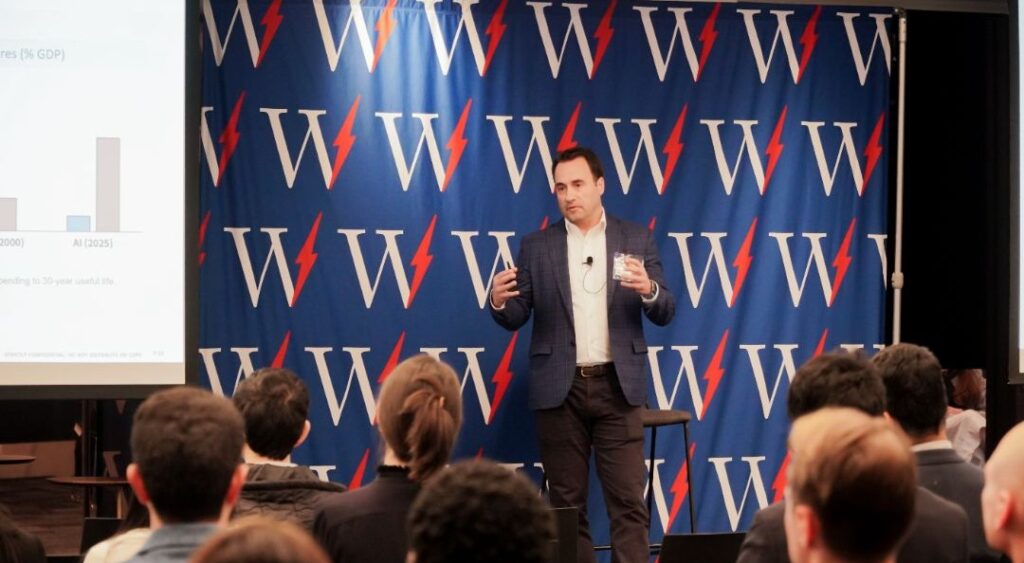
Rich Roloff of LS Power closed the conference with a macro-level analysis that contextualized the current infrastructure boom within the broader arc of American industrial history. Highlighting that hyperscalers spent $300 billion in 2024 alone, Roloff argued we are witnessing the “largest fixed-asset investment booms in modern history”.
- Historic Scale: Roloff presented data showing that depreciation-adjusted capital expenditure for AI, as a percentage of GDP, is now greater than that of the railroad era. He framed this massive capital deployment as a positive historical pattern, arguing that economic booms and busts are beneficial in the long run. Drawing a parallel to the fiber-optic overbuild of the dot-com era, he suggested that even if there is a bust, the resulting infrastructure, like the “dark fiber” that eventually lit up the modern internet, will lay the groundwork for decades of future utility.
- The Reality Check: Despite the optimism, Roloff offered a sober assessment of the generation mix. He warned that gas generation alone cannot fill the capacity gap due to turbine supply constraints in a highly concentrated market dominated by manufacturers like GE Vernova and Siemens. Furthermore, with renewable tax credits set to expire in 2029, he predicts a crush of activity as developers race to lock in safe harbor benefits before costs rise. With PPA prices forecast to rise by roughly 40% for solar and onshore wind by the end of the decade, he argued that state renewable portfolio standards (RPS) are nearly impossible to meet without a massive, successful deployment of offshore wind.
Investment Strategy: Roloff also discussed a recent major transaction by LS Power – monetizing their gas generation portfolio at significant return. While he was asked in Q&A about the coherence of exiting at a time when energy generation is in such high demand, he stated that a factor had been fund life cycle, as well as the fact the assets had been acquired at approximately 40% of replacement cost and appreciated markedly since, and that LS Power was now looking toward high-voltage transmission, where they are one of the largest competitive developers in the country. He concluded that the frequently cited “all of the above” strategy by other conference participants, incorporating clean baseload thermal, peakers, pumped storage, batteries, and renewables, is the only viable path to balancing the trilemma of reliability, affordability, and sustainability.
Conclusion
As the curtains closed on a day defined by both urgent warnings and boundless optimism, one truth emerged with crystal clarity: the energy transition has graduated from a debate of ideology to a challenge of execution.
The narrative arc of the conference, stretching from Mayor Nutter and Sam Robinson’s calls for partnership to Rich Roloff’s historical parallel of the railroad age, painted a picture of a sector undergoing a tectonic shift. We are no longer merely managing a grid; we are architecting the engine room for a new digital economy. Yet, amidst the fervor of the “nuclear renaissance” and the promise of Patrick Raab and Ayse Coskun’s technological innovations, the recurring motif was one of pragmatic grounding. Whether it was David Vahos insisting that the AI revolution must pay its ‘fair share’ for the grid, Manasi Desai pivoting our attention to the gritty “picks and shovels” of grid modernization, or the collective realization that skilled labor, not capital, is becoming a major constraint, the message was uniform: there are no silver bullets, only a mosaic of solutions.
Fortifying the future will not be achieved by choosing between electrons and algorithms, or between fossil fuels and renewables, but by weaving them into an “all-of-the-above” tapestry that is as resilient as it is revolutionary.